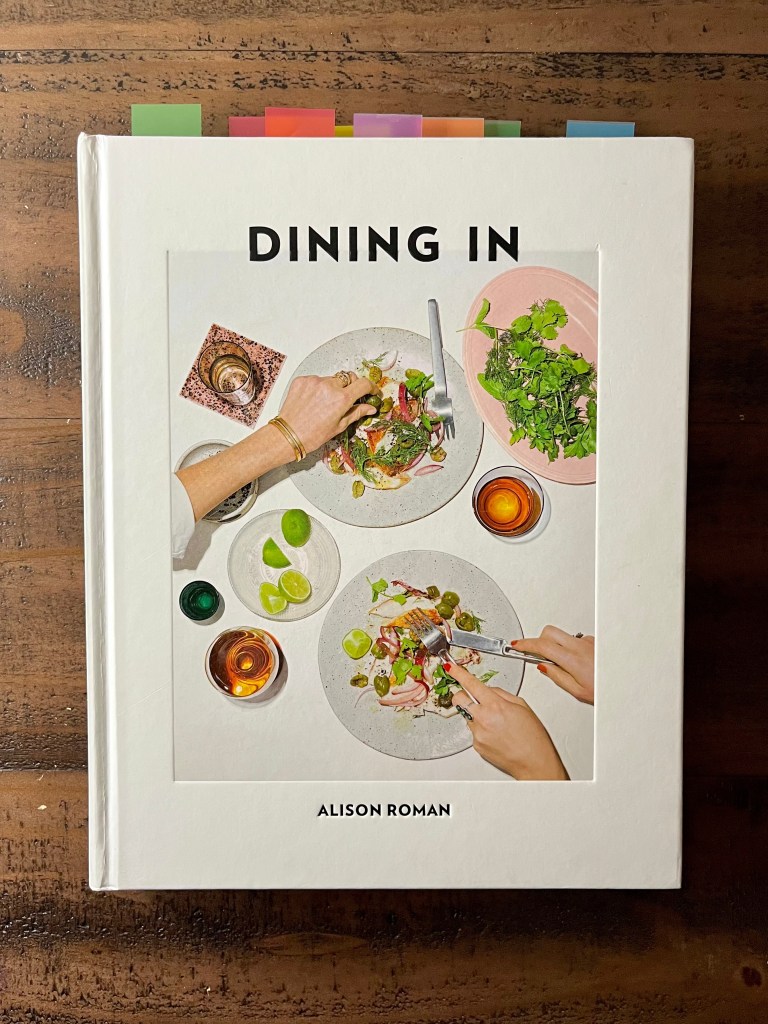
Welp, I did it. I cooked every single recipe from a cookbook, all 114 dishes in Dining In by Alison Roman. Fun coincidence: my first name and maiden initial is also Allyson R.
I will note that I did *not* begin cooking from this book with the intention of cooking the entire book. I have tried that many times with several other cookbooks in my collection and have always failed. So, what worked this time?
I unintentionally picked the right cookbook for the moment. That moment being a hot Texas summer postpartum with my third child, a gluten- and lactose-free husband, and two toddlers whose single daily serving of vegetables was a tablespoon of frozen corn kernels. In other words, I was homebound and coming off nine months of eating fast food chicken nuggets and sweets. My past foodie self was horrified. I needed freshness back in my life.

Browsing my cookbook collection of about 100 books (excessive, I know), I recalled Dining In had several interesting, yet easy (the key!), vegetable recipes. They felt manageable to cook during newborn naps. So, I started with the first recipe, “Vinegar-Roasted Beets with Spring Onions and Yogurt”. This is not the easiest vegetable recipe in the chapter; I had to prepare the beets and make a sauce. The beets turned out well, I did not care for the sauce. No problem – the recipe is easier now, and I have a bowl of prepared beets sitting in my fridge to munch on throughout the week!
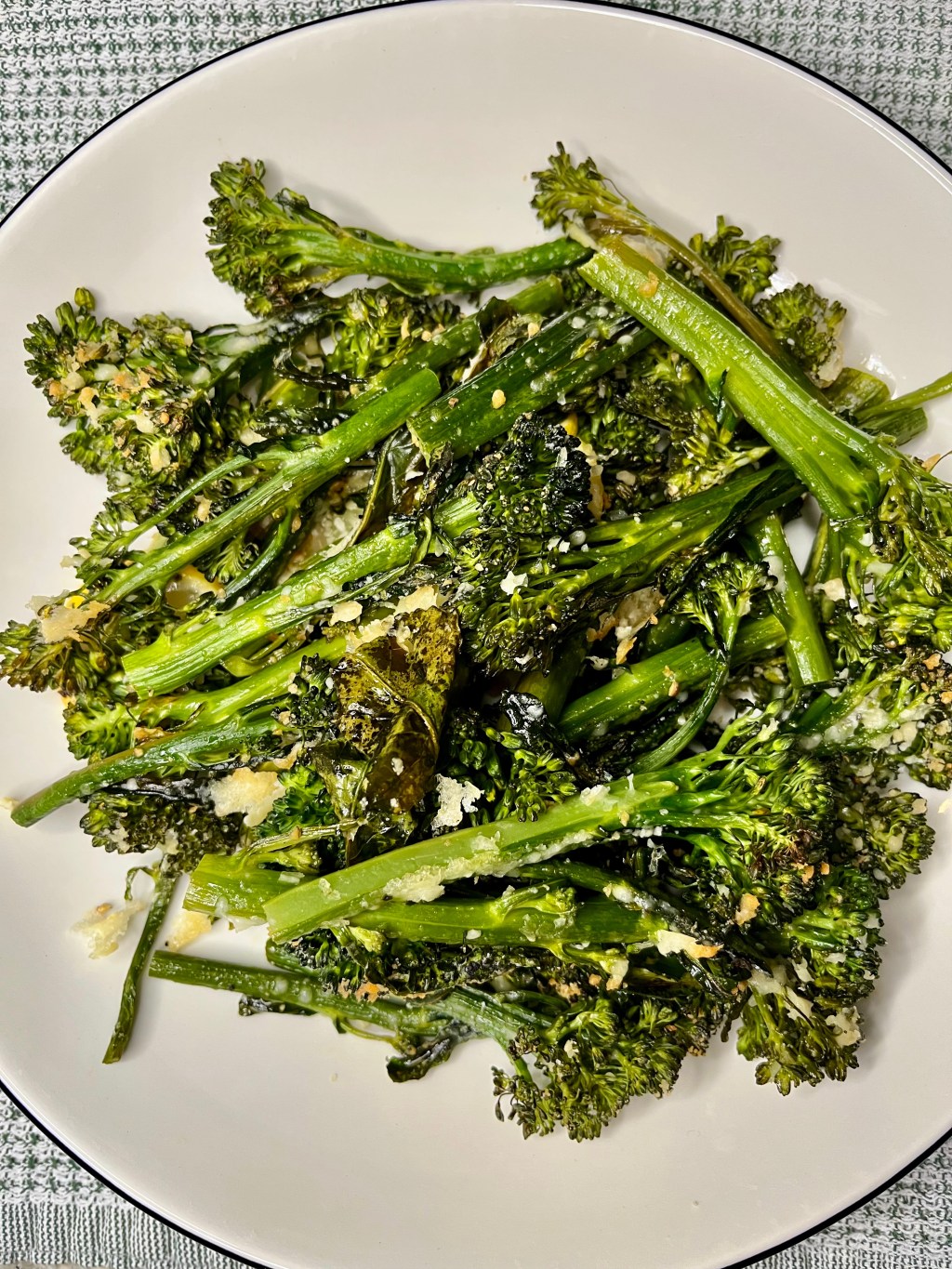
I moved onto the next recipe, “Blistered Green Beans with Creamy Tahini and Fresh Hot Sauce”. Once again, I did not love the sauce. Once again, not a problem. Onto the next recipe, and the next one, and the next one. After a few weeks, I cooked all 21 recipes from the vegetable chapter. My kids ate artichokes, asparagus, and cabbage. There was only one recipe, “Baked Summer Squash with Cream and Parmesan Bread Crumbs”, that I could not modify to be gluten- and lactose-free. Thankfully it was delicious, so I ate it myself.
I decided to keep going through the book – this was fun and I could sense the potential of cooking every recipe. The recipes fit our style. My husband and I were enjoying the food, and nothing was overly time-consuming or fussy. I had to mail-order one ingredient (lime pickle) and buy one piece of kitchen equipment (a round 9-inch cake pan). The entire project took about six months; some weeks I made 10 recipes and other weeks I made zero, like the week in August that our air conditioner died. In order of chapter completion, I cooked:
- Vegetables (21 recipes)
- Meat (19 recipes)
- Fruit Salads (7 recipes)
- Knife-and-Fork Salads (4 recipes)
- Savory Breakfasts (7 recipes)
- Sweets (19 recipes)
- Grains and Things (20 recipes)
- Fish (17 recipes)
No chapters had as many winners for me as that first vegetable chapter, but there were other delicious dinners (“Vinegar-Braised Chicken with Farro and Watercress”) and desserts (“Chocolate-Tahini Tart with Crunchy Salt”), many decent side dishes (“Spiced Lentils with Spring Onions”), and the occasional total fail (“Bacon-Roasted Pork Tenderloin with Caraway’d Cabbage and Apples”).
After almost exactly six months, my cook-the-book project was done. Yes, I learned a few things about cooking, but, more importantly, I honed my own palette and discovered what works and does not work for our family. I finally came up with that elusive seven day rotating meal plan that I can scale up or down in foodie complexity depending on the week (got time to make pasta sauce? great! otherwise, use half a jar of Rao’s pasta sauce from Costco). I am an avid home chef and cookbook lover, and this project allowed me to really geek out over a single cookbook, dive deep into the recipes, and come out with a better understanding of how to work my way through my cook(book) stack.
In fact, cooking the book was so fun, that I plan to do it again. Join me!
 the cook stack
Leave a reply to My 2026 Cooking Goals: Cook This Book and Snacking Cakes – the cook stack Cancel reply